Tuesday, May 25, 2010

What I'm Reading #4: ReConnecting Worship (Rob Weber with Stacy Hood)

ReConnecting Worship: Where Tradition & Innovation Converge by Rob Weber, with Stacy Hood

Here's yet another worship resource my field ed supervisor gave me. ReConnecting Worship was written by Rob Weber with Stacy Hood. In the foreword, Leonard Sweet writes, "In this wonderful book by Rob Weber and Stacy Hood, there is a keen sense that 'tradition' does not mean going backward, but not wanting to go forward without all the riches and resources available. They understand the difference between innovation that has been merely tinctured by tradition and innovation that has arisen from and been anointed in the tradition. Relevancy has too often equated with 'recency.'" This book is a guide to different styles of worship, what to expect in terms of reactions to change, and it comes as part of a kit that includes video of teaching and storytelling as well as resources for music ministry. The main part of the book begins with a prayer to guide the process of thinking about and developing worship, and its format is that of a week-by-week guide to integrating the readings into the life of the church.

Weber and Hood frequently return to the model of asking questions, especially "why" questions, and allowing space for worship to answer those. One image I particularly liked was that of a Jewish Passover Seder. The tradition is that the youngest person present asks a series of questions--"Why do we eat bitter herbs?"; "Why do we use the cup?"; and so on--and answers are given that hep to instruct the children and remind the adults of the rich symbolism inherent to the meal. I once attended a Seder with my family at the home of the Rabbi of Temple Israel, the conservative Jewish temple in Charlotte, NC. What I learned from that experience is that Seders are not only educational but also lots of fun--the table was littered with plastic bugs that we all held when reading about the plague of locusts (Exodus 10:1-20), and we got to throw kosher marshmallows at each other to enact the plague of hail (Exodus 9:13-24). I like this model of combining question, answer and play as one that can be applied to worship. Competing to see who could peg the rabbi's yarmulke with a marshmallows might have been a bit irreverent, but it was a creative way of engaging people of all ages (and in this case, of different creeds!) in the Biblical narrative. The materials were new, the stories old. That's what worship should have the freedom to do and to be.


Favorite Quotations

"Our diverse individual expressions of worship vary in size and shape. Like distinct raindrops, all of our worship finds its source and goal in the deep pool of God's presence and activity."

"Deep listening mitigates conflict, but more importantly it is evidence of the humility that God anticipates in worship."

"The words traditional and contemporary are used as if we share a definition in common. The truth is that these terms have become heavily value-laden and are always used from a particular interpretation to preserve one meaning or another."

"As the church seeks to discern how best to shape itself in the emerging century, the question is not helpfully presented as a choice between traditional and contemporary forms of expression. It is much more mature to describe a choice between a dynamic and productive use of tension or a destructive reaction to that same tension. The solution to this difficult struggle is not found in any one particular form but in a recovery of the original identity of the church as the people of God."

"Worshiping is like checking a compass to keep us oriented toward God and God's purposes for our lives. Navigators do not check a compass because it is entertaining, or because it is a really attractive compass, or because 'it is the same kind of compass my great-great-grandfather had,' or because 'that's the way we've always done it.' Navigators check the compass to orient themselves toward their intended destination. All worship should find its origin in this purpose."

"[Kierkegaard] said that the audience for worship is not the congregation but God. [...] Participants are shaped, formed, and built up through worship, but those benefits are byproducts of an authentic worship of God."

Monday, May 24, 2010

What I'm Reading #3: Redesigning Worship (by Kim Miller)

Redesigning Worship: Creating Powerful God Experiences, by Kim Miller

Redesigning Worship is one of the books that my field ed supervisor, Dr. Val Rosenquist, gave me to read as part of my worship learning experience at Hill's Chapel United Methodist Church this summer. The author, Kim Miller, is Campus Designer at Ginghamsburg Church in Tipp City, OH. That a church would have such a staff position is fascinating in and of itself and definitely piqued my interest in this book.

I'm probably not going to read this cover to cover, partly because some of this is just not applicable to the context of HCUMC and partly because I have a zillion other books I want to read. But there are definitely great resources here. There are even sample scripts for drama and media to incorporate into worship, part of the approach of "multisensory worship" that Miller emphasizes. Miller also stresses the importance of the spoken word to communicate and motivate. She says that God speaks to us in many different ways and can reveal himself through all sorts of art forms, but ultimately it is verbal language that convicts and explains. As someone who is very interested in the role of the arts in worship, this is important for me to keep at the forefront.

I do have one qualm about this book (remember, I'm only reading portions, so I may have missed something). I saw a subheading in the section about building a worship team entitled "Seek Only Mission-Driven People." Along the same line(s), I read a quote from Mike Slaughter that I at first wrote down as a favorite quote, but later removed: "Ironically, worship is not the central focus of church, rather the process of focusing the church for God's mission in the world." Now, I do not fundamentally disagree with this; much of Slaughter's point is that there is a problem when people see the whole of their life of faith as being contained in one hour on Sunday mornings. That is absolutely true. I have heard pastors deliver the simple benediction, "The worship is ended; let the service begin," and I love it. But I am wary of anyone who is too quick to treat worship as a means to an end. It may be that I have too narrow an idea of what defines "mission" in my own mind, but I worry that the admonition to "seek only mission-driven people" creates a worship team whose outlook might be too myopic. I like the idea of balancing out folks who are gung-ho on the mission front with those who are deeply prayerful and spiritual. Worship is about forming us to go out, but it is also an end in an of itself, and we should not be so quick to rush out and be Christ's hands and feet that we forget to kneel at his feet.

But I think the witness of Ginghamsburg, Mike Slaughter and Kim Miller is a prophetic one (and it is entirely likely that either Slaughter or Miller would read the above paragraph and agree with me). The focus on the Word; how they acknowledge and embrace tension and conflict in worship; the determination not to sacrifice truth to relevance; all of these are things from which the broader church can and should learn.


Favorite Quotations

"If there is no tension with the message, the team doesn't feel it's worship worthy."

"No matter what the theme or occasion for the worship gathering, the word must drive the worship. Everything else we do must support and enhance it."

"God's redemptive purpose is to get more of the church into the world rather than coaxing the world into the church." -- Mike Slaughter, Ginghamsburg Church

"We must show the relevance of Jesus to our culture but also the radical difference, the 'worldview' of Jesus in the culture. Too often we have strived to be relevant but ceased to be revolutionary." -- Mike Slaughter

"Worship loses the prophetic voice of God when we fear people and not God." -- Mike Slaughter

Field Notes #3: Monday, Monday (First Day in the Office!)

I've been reading Henri Nouwen's The Inner Voice of Love, a collection of spiritual imperatives and reflections, as a daily devotional for a while now. Today's entry was entitled "Keep Trusting God's Call." What a perfect admonition to keep in mind on my first day at the office.

I came in this morning and began making a list of supplies for Vacation Bible School. We had a planning meeting for VBS yesterday afternoon, and I was assigned to be in charge of the games. We're using Cokesbury's "Galactic Blast" VBS curriculum, so the planned activities include "Planet Toss" and "Creation Station Relay." I'm always skeptical of curricula like this, but these activities actually look pretty fun.

I also got to write my first contributions to "The Hill's Chapel House Call," HCUMC's monthly newsletter. I drew up two short articles, one about VBS and the other introducing myself to the congregation.

I got to have lunch in the office with Pastor Val and LeaAnne, the administrative assistant, which was cool. Val and I coordinated calendars and set a third Sunday for me to preach, June 6 (I was already scheduled for July 4 and 18).

One highlight today was that Val gave me a copy of the church directory. This may seem like a small thing, but I'm actually really glad to have it. I've met so many people in the past few days and yet I've forgotten so many names already. I'm going to do something that my dad does at his church (which has quite a few more members than HCUMC, so it'll be more manageable for me): each day, I'll take one page of the directory and pray for all the families and individuals on it. I think this will be a good exercise not only to help me learn names and faces but also intentionally to incorporate HCUMC's membership into my prayer life.

This afternoon, Val and I began to complete the Learning-Serving Covenant required as a part of field ed. The idea is for each student to set learning goals and to establish guidelines for supervision and so on. Even though this is my first field ed placement, I was already familiar with the covenant, as we had used in in the PathWays summer program. But it was really good to go through it with Val, and I got a lot out of the conversations we had when we went off on tangents.

Since I'll be involved in helping plan and lead worship a great deal this summer, Val lent me a few books that I'm super excited about, much to my embarrassment. They are: ReConnecting Worship: Where Tradition & Innovation Converge, by Rob Weber with Stacy Hood; Redesigning Worship: Creating Powerful God Experiences, by Kim Miller; and A Royal "Waste" of Time: The Splendor of Worshiping God and Being Church for the World, by Marva J. Dawn. That last one is the sequel to Reaching out Without Dumbing Down, one of the many books I am determined to read this summer. All of this will surely show up in this blog later.

After work, I came back to the Edwards' house, where we had dinner and then headed off to aerobics class at the church, which Debbie Edwards teaches. That was an intense workout! And we did it all to techno hymns, which was pretty amusing. I'm glad I went, not only for the exercise but also because it gave me the opportunity to connect with a few more women from HCUMC. Debbie holds that class twice a week, so I'll try to start going regularly.

And now I'm bushed. (Do people actually say that?) I'm gonna try to get started on one of these books, but I may well fall asleep reading. Which isn't such a bad thing. :)

A Quote on Worship


"Worship is love preparing to move."

Author unknown (from the Ekklesia Church @ Raleigh website)

Sunday, May 23, 2010

Field Notes #2: Sittin' on the Dock of the Lake (First Sunday/Pentecost!)

If I look up from my laptop right now, this is what I see:


Guys, my field placement is sweet. Not only am I living at a sweet lake house before moving into my own newly renovated space right next to the church, the folks at HCUMC are wonderful. I was a little nervous at church this morning, eager to meet the congregation but still a little antsy about the whole thing, but I felt like almost every single congregation member came up and introduced themselves to me this morning, telling me how excited they are for me to be there and offering all sorts of assistance. I've got folks who want to take me out on jet skis, a private detective offering to help keep an eye on me when I move into the parsonage, and tons of people feeding me--I already got taken out to lunch today. Tonight, we had a "pounding" (my boyfriend hates the term, understandably), and people brought various foods and a number of gift cards to Wal-Mart and other grocery stores, as well as gift certificates to a local grill. They even passed around a sign-up sheet for people to take me to or cook me lunch or dinner throughout the summer. I am getting taken care of for real. I've even met my twin (I have a 7th-grade doppelganger named Maddie) and got recruited to the softball team.

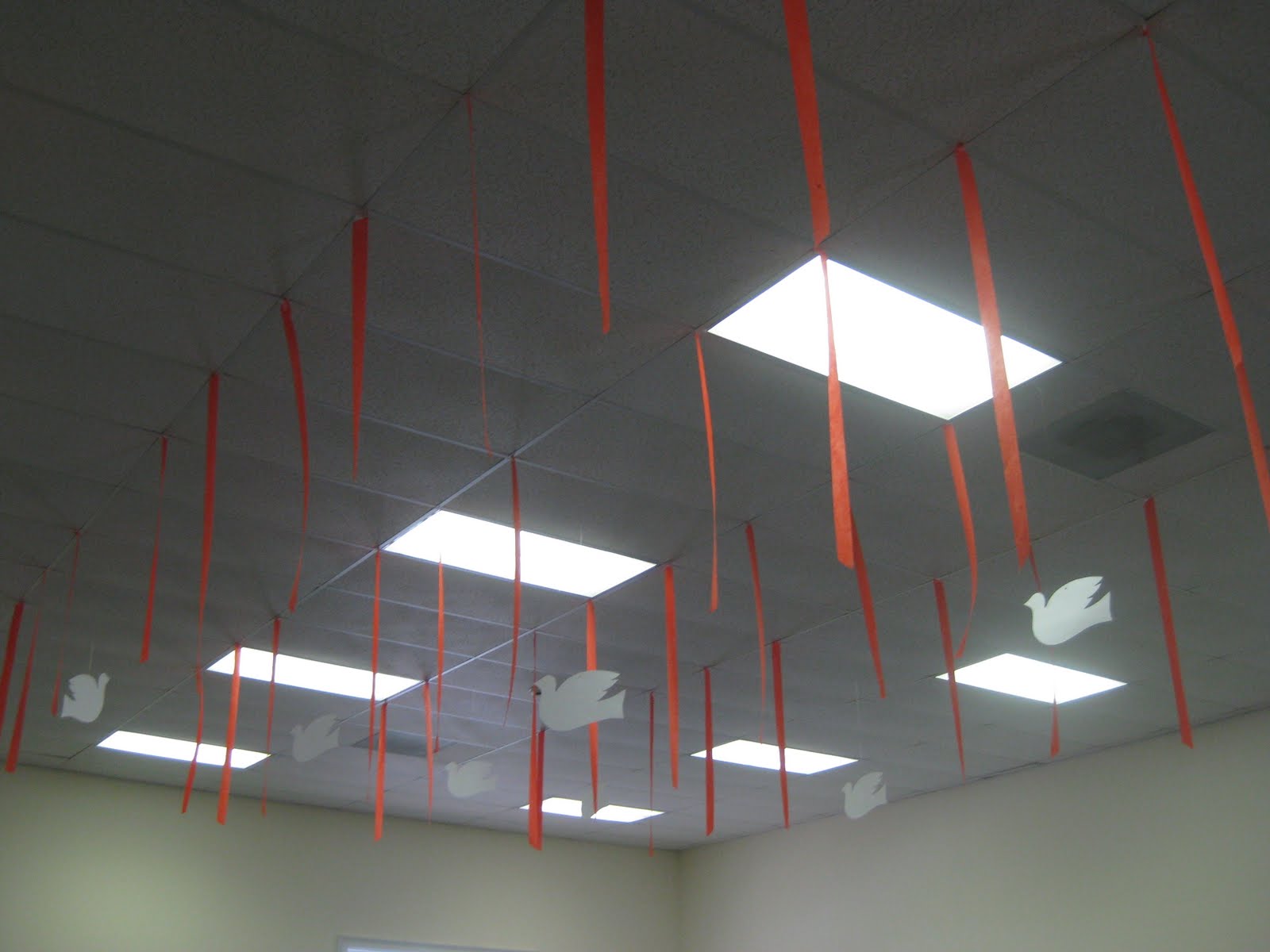
Anyway, needless to say, the pounding was great fun. But I haven't even talked about church this morning. Today is Pentecost. Happy Birthday, Church!! Today was the last Sunday of two worship services (9:00 and 10:00) at Hill's Chapel UMC, which I was glad I got to experience. The Family Life Center (where worship is being held while the new sanctuary is being built) was wonderfully decorated with red for the occasion--vestments, streamers, geraniums, you name it.

The first service has a bit more of a contemporary feel--Art plays drums and we get a few praise choruses. I led the call to worship and sang with the lead singers. Between services, I sat in on an adult Sunday School class, and at 11 I sang with the choir. I'm really looking forward to getting more involved with music and worship at HCUMC. Their worship director, Jeana Borman, also serves as accompanist and vocal coach at Lenoir-Rhyne University, so she's great.

I also really appreciated Pastor Val's sermon this morning. She preached from Acts 2:1-20, the narrative of the first Pentecost. One thing she said that stuck with me referred to verse 13, where, witnessing the excitement of the disciples as suddenly they are able to understand the languages of people from far and wide proclaiming God's power, "others sneered and said, ‘They are filled with new wine.’" Pastor Val said, "They weren't drunk on new wine; they were new wine." She referenced Mark 2:22, where Jesus points out that new wine must be put into new wineskins; old wineskins will burst. The Holy Spirit, Pastor Val said, was doing a new thing on that first Pentecost, which proclaimed that the church was not for any one people, race, culture or language, but was to deliver the Gospel to all nations.

So yeah, I'd say I had a good first Sunday. :)

Saturday, May 22, 2010

Field Notes #1: Arrival in Stanley

Okey dokey. Here's my next blog series: "Field Notes." Tomorrow, I officially start my summer field education placement. The Field Ed program at Duke Divinity School offers summer and academic year opportunities for students in church and agency placements, many of which (mine included) are funded by the Duke Endowment. Two units of field ed, one of which should be in a church setting, are required for successful completion of the M.Div. degree. Here are a few quips from the Field Ed website:

Field Education provides an opportunity for students to discern their vocational identity through contextual learning. Settings vary, from parish to non-profit and from domestic to international.

As part of the Field Education program, each student commits to:

  • Explore ministerial roles and identity, work to clarify and test his or her call, build and strengthen skills for ministry
  • 40 hours per week of preparation and presence for a 10-week summer placement
  • 13-15 hours weekly of preparation and presence for a 30-week academic year placement

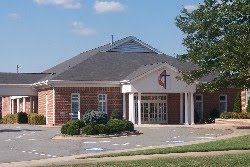
This summer, I'll be at Hill's Chapel United Methodist Church in Stanley, North Carolina.

The church isn't quite where Google Maps has Stanley tagged, but it's basically on the west side of Lake Norman. At the moment, I'm actually staying at a house that is right on the lake. I'll be moving into the old parsonage, but it's currently being renovated (the building will also include new offices, meeting space and more--it looks GREAT, even if it's still a bit of a mess), so for now I'm with the Edwards family. They are wonderful folks with a beautiful home and two adorable Yorkies. Check out the video below to see Lilly, one of their pups (who is sitting on the bed with me as I type this), begging for my pita bites.


(I LOVE dogs.)

Earlier, the pastor, Dr. Val Rosenquist, gave me a tour of the church. They recently tore down their old sanctuary and education building, but I was surprised by just how much space they still have. Their Family Life Center is a great location, where their contemporary service usually meets and where all worship is currently being held. They usually have a 9:00 a.m. contemporary service and an 11:00 a.m. traditional service, but starting May 30, they'll go to one blended service at 10:00 a.m. I'm looking forward to seeing what the differences are in the normal services tomorrow and then learning what it means to have a "blended" service. I'm hoping to have some opportunities to observe or help with worship planning and maybe with music, too.

Besides great spaces for worship, meetings, Sunday School, events and more, HCUMC has some really fun stuff out back. Behind the church is a playground, a baseball field, a basketball court, a track, a volleyball court and a picnic patio. All those things are open to the public, and apparently they are all frequented by members of the community. What a great hospitality and outreach resource! I'll definitely be jogging the track some this summer, and I brought my softball glove and can hopefully track down a basketball, so who knows.

Tomorrow I'll report about my first Sunday at HCUMC! I'm now off to have dinner with the Edwards and get ready to play music at Maddi's Southern Bistro in Huntersville's Birkdale Village tonight at 9. Music is going to be the sort of me-time supplement to my field ed--I had a fun show last night at eeZ Fusion & Sushi, also in Birkdale.

Thursday, May 20, 2010

What I'm Reading #2: The Irrelevance and Relevance of the Christian Message (Paul Tillich)

The Irrelevance and Relevance of the Christian Message, by Paul Tillich

This slim volume is actually a collection of three lectures delivered by Paul Tillich. The description on the back of the 2007 edition aptly describes its content:

The Irrelevance and Relevance of the Christian Message is a transcript of Paul Tillich's 1963 Earl Lectures at the Graduate Theological Union. Delivered just two years before his death, these lectures present Tillich's heartfelt and deeply personal understanding of the relevance of Christian preaching and Christian theology.

Why, Tillich asks, has the Christian message become seemingly irrelevant to contemporary society? Is the gospel able to give answers to the questions raised by the existentialist analysis of the human predicament? Yes, he answers--but in order to do so Christian teaching and preaching need to undergo dramatic renewal, the root of which requires an affirmation of love as central to Christian identity. Further, we need to recognize that this task is not limited to preachers and theologians; all of us together are responsible for the irrelevance of the relevance of the gospel in our time.

I picked up this book at the suggestion of Leif Erik Bergerud (he doesn't know this (well, he does now), but my boyfriend and I refer to him as "Odin" because he totally has a Viking name), my predecessor in managing the New Creation Arts blog. I had posted about Another Level, a church that meets in a bar. I was intrigued by their approach and impressed by how they are able to reach out to a population that usually feels unwelcome in traditional church settings.

This encounter was just one more instance of me wrestling with the question of how far relevance can go before it renders the Christian message meaningless. On the other hand, as Tillich points out, irrelevance makes the gospel just as empty to outsiders (and even to supposed insiders). Tillich's talks were delivered almost 50 years ago, but they are just as alive and relevant (ha) today as they were in his time. I wonder if he ever imagined just how much of a buzzword "relevance" would become. A church I'm familiar with in Durham uses the motto "where reverence meets relevance." I even saw something about a church promoting "contemporvant" ("contemporary" + "relevant") worship.

Of course, there's a delicate balance to be struck here. The problem with getting too fixated on making Christianity relevant is that it makes our culture the standard. One could argue that we should be asking how we can make our society more relevant to the gospel. Of course, that would require a transformation of our world to the point that it would be unrecognizable in many aspects, so that's just not feasible. The gospel needs to be palatable to real people living in the real world. Tillich's suggestion of clinging to a core message of love is a profound move; it takes the gospel straight to the heart of being without compromising it. And his emphasis on the priesthood of all believers makes the participatory nature of faith a central aspect.

I suggest you check this out for yourself. After all, it's only 63 pages long.


Favorite Quotations:

"Tradition is good. Traditionalism is bad."

"What about the attack of 'relativism' against all contents of belief and ethics? There is no relativism with respect to the experience of the Unconditional in oneself. But there is the relativity of all history with respect to the religious symbols and the ethical commands. They are not unconditional. They are historically conditioned and changing. They all stand under the one unconditional criterion: agape, the Christian word for love. This is not a law, but is the negation of every law. It is in itself unconditional because nothing can transcend love and nothing less than love is sufficient. But what love is in the concrete moment is open to the creative understanding of the situation and does not have the character of a law we can define and obey."

"I believe it is the unique greatness of Christianity that it shows the positivity of life in the principle which has had many names in Christian history but which I like to call 'the acceptance of the unacceptable,' namely, the acceptance of us. ...the unacceptable must first be accepted and only then can be transformed."

Tuesday, May 25, 2010

What I'm Reading #4: ReConnecting Worship (Rob Weber with Stacy Hood)

ReConnecting Worship: Where Tradition & Innovation Converge by Rob Weber, with Stacy Hood

Here's yet another worship resource my field ed supervisor gave me. ReConnecting Worship was written by Rob Weber with Stacy Hood. In the foreword, Leonard Sweet writes, "In this wonderful book by Rob Weber and Stacy Hood, there is a keen sense that 'tradition' does not mean going backward, but not wanting to go forward without all the riches and resources available. They understand the difference between innovation that has been merely tinctured by tradition and innovation that has arisen from and been anointed in the tradition. Relevancy has too often equated with 'recency.'" This book is a guide to different styles of worship, what to expect in terms of reactions to change, and it comes as part of a kit that includes video of teaching and storytelling as well as resources for music ministry. The main part of the book begins with a prayer to guide the process of thinking about and developing worship, and its format is that of a week-by-week guide to integrating the readings into the life of the church.

Weber and Hood frequently return to the model of asking questions, especially "why" questions, and allowing space for worship to answer those. One image I particularly liked was that of a Jewish Passover Seder. The tradition is that the youngest person present asks a series of questions--"Why do we eat bitter herbs?"; "Why do we use the cup?"; and so on--and answers are given that hep to instruct the children and remind the adults of the rich symbolism inherent to the meal. I once attended a Seder with my family at the home of the Rabbi of Temple Israel, the conservative Jewish temple in Charlotte, NC. What I learned from that experience is that Seders are not only educational but also lots of fun--the table was littered with plastic bugs that we all held when reading about the plague of locusts (Exodus 10:1-20), and we got to throw kosher marshmallows at each other to enact the plague of hail (Exodus 9:13-24). I like this model of combining question, answer and play as one that can be applied to worship. Competing to see who could peg the rabbi's yarmulke with a marshmallows might have been a bit irreverent, but it was a creative way of engaging people of all ages (and in this case, of different creeds!) in the Biblical narrative. The materials were new, the stories old. That's what worship should have the freedom to do and to be.


Favorite Quotations

"Our diverse individual expressions of worship vary in size and shape. Like distinct raindrops, all of our worship finds its source and goal in the deep pool of God's presence and activity."

"Deep listening mitigates conflict, but more importantly it is evidence of the humility that God anticipates in worship."

"The words traditional and contemporary are used as if we share a definition in common. The truth is that these terms have become heavily value-laden and are always used from a particular interpretation to preserve one meaning or another."

"As the church seeks to discern how best to shape itself in the emerging century, the question is not helpfully presented as a choice between traditional and contemporary forms of expression. It is much more mature to describe a choice between a dynamic and productive use of tension or a destructive reaction to that same tension. The solution to this difficult struggle is not found in any one particular form but in a recovery of the original identity of the church as the people of God."

"Worshiping is like checking a compass to keep us oriented toward God and God's purposes for our lives. Navigators do not check a compass because it is entertaining, or because it is a really attractive compass, or because 'it is the same kind of compass my great-great-grandfather had,' or because 'that's the way we've always done it.' Navigators check the compass to orient themselves toward their intended destination. All worship should find its origin in this purpose."

"[Kierkegaard] said that the audience for worship is not the congregation but God. [...] Participants are shaped, formed, and built up through worship, but those benefits are byproducts of an authentic worship of God."

Monday, May 24, 2010

What I'm Reading #3: Redesigning Worship (by Kim Miller)

Redesigning Worship: Creating Powerful God Experiences, by Kim Miller

Redesigning Worship is one of the books that my field ed supervisor, Dr. Val Rosenquist, gave me to read as part of my worship learning experience at Hill's Chapel United Methodist Church this summer. The author, Kim Miller, is Campus Designer at Ginghamsburg Church in Tipp City, OH. That a church would have such a staff position is fascinating in and of itself and definitely piqued my interest in this book.

I'm probably not going to read this cover to cover, partly because some of this is just not applicable to the context of HCUMC and partly because I have a zillion other books I want to read. But there are definitely great resources here. There are even sample scripts for drama and media to incorporate into worship, part of the approach of "multisensory worship" that Miller emphasizes. Miller also stresses the importance of the spoken word to communicate and motivate. She says that God speaks to us in many different ways and can reveal himself through all sorts of art forms, but ultimately it is verbal language that convicts and explains. As someone who is very interested in the role of the arts in worship, this is important for me to keep at the forefront.

I do have one qualm about this book (remember, I'm only reading portions, so I may have missed something). I saw a subheading in the section about building a worship team entitled "Seek Only Mission-Driven People." Along the same line(s), I read a quote from Mike Slaughter that I at first wrote down as a favorite quote, but later removed: "Ironically, worship is not the central focus of church, rather the process of focusing the church for God's mission in the world." Now, I do not fundamentally disagree with this; much of Slaughter's point is that there is a problem when people see the whole of their life of faith as being contained in one hour on Sunday mornings. That is absolutely true. I have heard pastors deliver the simple benediction, "The worship is ended; let the service begin," and I love it. But I am wary of anyone who is too quick to treat worship as a means to an end. It may be that I have too narrow an idea of what defines "mission" in my own mind, but I worry that the admonition to "seek only mission-driven people" creates a worship team whose outlook might be too myopic. I like the idea of balancing out folks who are gung-ho on the mission front with those who are deeply prayerful and spiritual. Worship is about forming us to go out, but it is also an end in an of itself, and we should not be so quick to rush out and be Christ's hands and feet that we forget to kneel at his feet.

But I think the witness of Ginghamsburg, Mike Slaughter and Kim Miller is a prophetic one (and it is entirely likely that either Slaughter or Miller would read the above paragraph and agree with me). The focus on the Word; how they acknowledge and embrace tension and conflict in worship; the determination not to sacrifice truth to relevance; all of these are things from which the broader church can and should learn.


Favorite Quotations

"If there is no tension with the message, the team doesn't feel it's worship worthy."

"No matter what the theme or occasion for the worship gathering, the word must drive the worship. Everything else we do must support and enhance it."

"God's redemptive purpose is to get more of the church into the world rather than coaxing the world into the church." -- Mike Slaughter, Ginghamsburg Church

"We must show the relevance of Jesus to our culture but also the radical difference, the 'worldview' of Jesus in the culture. Too often we have strived to be relevant but ceased to be revolutionary." -- Mike Slaughter

"Worship loses the prophetic voice of God when we fear people and not God." -- Mike Slaughter

Field Notes #3: Monday, Monday (First Day in the Office!)

I've been reading Henri Nouwen's The Inner Voice of Love, a collection of spiritual imperatives and reflections, as a daily devotional for a while now. Today's entry was entitled "Keep Trusting God's Call." What a perfect admonition to keep in mind on my first day at the office.

I came in this morning and began making a list of supplies for Vacation Bible School. We had a planning meeting for VBS yesterday afternoon, and I was assigned to be in charge of the games. We're using Cokesbury's "Galactic Blast" VBS curriculum, so the planned activities include "Planet Toss" and "Creation Station Relay." I'm always skeptical of curricula like this, but these activities actually look pretty fun.

I also got to write my first contributions to "The Hill's Chapel House Call," HCUMC's monthly newsletter. I drew up two short articles, one about VBS and the other introducing myself to the congregation.

I got to have lunch in the office with Pastor Val and LeaAnne, the administrative assistant, which was cool. Val and I coordinated calendars and set a third Sunday for me to preach, June 6 (I was already scheduled for July 4 and 18).

One highlight today was that Val gave me a copy of the church directory. This may seem like a small thing, but I'm actually really glad to have it. I've met so many people in the past few days and yet I've forgotten so many names already. I'm going to do something that my dad does at his church (which has quite a few more members than HCUMC, so it'll be more manageable for me): each day, I'll take one page of the directory and pray for all the families and individuals on it. I think this will be a good exercise not only to help me learn names and faces but also intentionally to incorporate HCUMC's membership into my prayer life.

This afternoon, Val and I began to complete the Learning-Serving Covenant required as a part of field ed. The idea is for each student to set learning goals and to establish guidelines for supervision and so on. Even though this is my first field ed placement, I was already familiar with the covenant, as we had used in in the PathWays summer program. But it was really good to go through it with Val, and I got a lot out of the conversations we had when we went off on tangents.

Since I'll be involved in helping plan and lead worship a great deal this summer, Val lent me a few books that I'm super excited about, much to my embarrassment. They are: ReConnecting Worship: Where Tradition & Innovation Converge, by Rob Weber with Stacy Hood; Redesigning Worship: Creating Powerful God Experiences, by Kim Miller; and A Royal "Waste" of Time: The Splendor of Worshiping God and Being Church for the World, by Marva J. Dawn. That last one is the sequel to Reaching out Without Dumbing Down, one of the many books I am determined to read this summer. All of this will surely show up in this blog later.

After work, I came back to the Edwards' house, where we had dinner and then headed off to aerobics class at the church, which Debbie Edwards teaches. That was an intense workout! And we did it all to techno hymns, which was pretty amusing. I'm glad I went, not only for the exercise but also because it gave me the opportunity to connect with a few more women from HCUMC. Debbie holds that class twice a week, so I'll try to start going regularly.

And now I'm bushed. (Do people actually say that?) I'm gonna try to get started on one of these books, but I may well fall asleep reading. Which isn't such a bad thing. :)

A Quote on Worship


"Worship is love preparing to move."

Author unknown (from the Ekklesia Church @ Raleigh website)

Sunday, May 23, 2010

Field Notes #2: Sittin' on the Dock of the Lake (First Sunday/Pentecost!)

If I look up from my laptop right now, this is what I see:


Guys, my field placement is sweet. Not only am I living at a sweet lake house before moving into my own newly renovated space right next to the church, the folks at HCUMC are wonderful. I was a little nervous at church this morning, eager to meet the congregation but still a little antsy about the whole thing, but I felt like almost every single congregation member came up and introduced themselves to me this morning, telling me how excited they are for me to be there and offering all sorts of assistance. I've got folks who want to take me out on jet skis, a private detective offering to help keep an eye on me when I move into the parsonage, and tons of people feeding me--I already got taken out to lunch today. Tonight, we had a "pounding" (my boyfriend hates the term, understandably), and people brought various foods and a number of gift cards to Wal-Mart and other grocery stores, as well as gift certificates to a local grill. They even passed around a sign-up sheet for people to take me to or cook me lunch or dinner throughout the summer. I am getting taken care of for real. I've even met my twin (I have a 7th-grade doppelganger named Maddie) and got recruited to the softball team.

Anyway, needless to say, the pounding was great fun. But I haven't even talked about church this morning. Today is Pentecost. Happy Birthday, Church!! Today was the last Sunday of two worship services (9:00 and 10:00) at Hill's Chapel UMC, which I was glad I got to experience. The Family Life Center (where worship is being held while the new sanctuary is being built) was wonderfully decorated with red for the occasion--vestments, streamers, geraniums, you name it.

The first service has a bit more of a contemporary feel--Art plays drums and we get a few praise choruses. I led the call to worship and sang with the lead singers. Between services, I sat in on an adult Sunday School class, and at 11 I sang with the choir. I'm really looking forward to getting more involved with music and worship at HCUMC. Their worship director, Jeana Borman, also serves as accompanist and vocal coach at Lenoir-Rhyne University, so she's great.

I also really appreciated Pastor Val's sermon this morning. She preached from Acts 2:1-20, the narrative of the first Pentecost. One thing she said that stuck with me referred to verse 13, where, witnessing the excitement of the disciples as suddenly they are able to understand the languages of people from far and wide proclaiming God's power, "others sneered and said, ‘They are filled with new wine.’" Pastor Val said, "They weren't drunk on new wine; they were new wine." She referenced Mark 2:22, where Jesus points out that new wine must be put into new wineskins; old wineskins will burst. The Holy Spirit, Pastor Val said, was doing a new thing on that first Pentecost, which proclaimed that the church was not for any one people, race, culture or language, but was to deliver the Gospel to all nations.

So yeah, I'd say I had a good first Sunday. :)

Saturday, May 22, 2010

Field Notes #1: Arrival in Stanley

Okey dokey. Here's my next blog series: "Field Notes." Tomorrow, I officially start my summer field education placement. The Field Ed program at Duke Divinity School offers summer and academic year opportunities for students in church and agency placements, many of which (mine included) are funded by the Duke Endowment. Two units of field ed, one of which should be in a church setting, are required for successful completion of the M.Div. degree. Here are a few quips from the Field Ed website:

Field Education provides an opportunity for students to discern their vocational identity through contextual learning. Settings vary, from parish to non-profit and from domestic to international.

As part of the Field Education program, each student commits to:

  • Explore ministerial roles and identity, work to clarify and test his or her call, build and strengthen skills for ministry
  • 40 hours per week of preparation and presence for a 10-week summer placement
  • 13-15 hours weekly of preparation and presence for a 30-week academic year placement

This summer, I'll be at Hill's Chapel United Methodist Church in Stanley, North Carolina.

The church isn't quite where Google Maps has Stanley tagged, but it's basically on the west side of Lake Norman. At the moment, I'm actually staying at a house that is right on the lake. I'll be moving into the old parsonage, but it's currently being renovated (the building will also include new offices, meeting space and more--it looks GREAT, even if it's still a bit of a mess), so for now I'm with the Edwards family. They are wonderful folks with a beautiful home and two adorable Yorkies. Check out the video below to see Lilly, one of their pups (who is sitting on the bed with me as I type this), begging for my pita bites.


(I LOVE dogs.)

Earlier, the pastor, Dr. Val Rosenquist, gave me a tour of the church. They recently tore down their old sanctuary and education building, but I was surprised by just how much space they still have. Their Family Life Center is a great location, where their contemporary service usually meets and where all worship is currently being held. They usually have a 9:00 a.m. contemporary service and an 11:00 a.m. traditional service, but starting May 30, they'll go to one blended service at 10:00 a.m. I'm looking forward to seeing what the differences are in the normal services tomorrow and then learning what it means to have a "blended" service. I'm hoping to have some opportunities to observe or help with worship planning and maybe with music, too.

Besides great spaces for worship, meetings, Sunday School, events and more, HCUMC has some really fun stuff out back. Behind the church is a playground, a baseball field, a basketball court, a track, a volleyball court and a picnic patio. All those things are open to the public, and apparently they are all frequented by members of the community. What a great hospitality and outreach resource! I'll definitely be jogging the track some this summer, and I brought my softball glove and can hopefully track down a basketball, so who knows.

Tomorrow I'll report about my first Sunday at HCUMC! I'm now off to have dinner with the Edwards and get ready to play music at Maddi's Southern Bistro in Huntersville's Birkdale Village tonight at 9. Music is going to be the sort of me-time supplement to my field ed--I had a fun show last night at eeZ Fusion & Sushi, also in Birkdale.

Thursday, May 20, 2010

What I'm Reading #2: The Irrelevance and Relevance of the Christian Message (Paul Tillich)

The Irrelevance and Relevance of the Christian Message, by Paul Tillich

This slim volume is actually a collection of three lectures delivered by Paul Tillich. The description on the back of the 2007 edition aptly describes its content:

The Irrelevance and Relevance of the Christian Message is a transcript of Paul Tillich's 1963 Earl Lectures at the Graduate Theological Union. Delivered just two years before his death, these lectures present Tillich's heartfelt and deeply personal understanding of the relevance of Christian preaching and Christian theology.

Why, Tillich asks, has the Christian message become seemingly irrelevant to contemporary society? Is the gospel able to give answers to the questions raised by the existentialist analysis of the human predicament? Yes, he answers--but in order to do so Christian teaching and preaching need to undergo dramatic renewal, the root of which requires an affirmation of love as central to Christian identity. Further, we need to recognize that this task is not limited to preachers and theologians; all of us together are responsible for the irrelevance of the relevance of the gospel in our time.

I picked up this book at the suggestion of Leif Erik Bergerud (he doesn't know this (well, he does now), but my boyfriend and I refer to him as "Odin" because he totally has a Viking name), my predecessor in managing the New Creation Arts blog. I had posted about Another Level, a church that meets in a bar. I was intrigued by their approach and impressed by how they are able to reach out to a population that usually feels unwelcome in traditional church settings.

This encounter was just one more instance of me wrestling with the question of how far relevance can go before it renders the Christian message meaningless. On the other hand, as Tillich points out, irrelevance makes the gospel just as empty to outsiders (and even to supposed insiders). Tillich's talks were delivered almost 50 years ago, but they are just as alive and relevant (ha) today as they were in his time. I wonder if he ever imagined just how much of a buzzword "relevance" would become. A church I'm familiar with in Durham uses the motto "where reverence meets relevance." I even saw something about a church promoting "contemporvant" ("contemporary" + "relevant") worship.

Of course, there's a delicate balance to be struck here. The problem with getting too fixated on making Christianity relevant is that it makes our culture the standard. One could argue that we should be asking how we can make our society more relevant to the gospel. Of course, that would require a transformation of our world to the point that it would be unrecognizable in many aspects, so that's just not feasible. The gospel needs to be palatable to real people living in the real world. Tillich's suggestion of clinging to a core message of love is a profound move; it takes the gospel straight to the heart of being without compromising it. And his emphasis on the priesthood of all believers makes the participatory nature of faith a central aspect.

I suggest you check this out for yourself. After all, it's only 63 pages long.


Favorite Quotations:

"Tradition is good. Traditionalism is bad."

"What about the attack of 'relativism' against all contents of belief and ethics? There is no relativism with respect to the experience of the Unconditional in oneself. But there is the relativity of all history with respect to the religious symbols and the ethical commands. They are not unconditional. They are historically conditioned and changing. They all stand under the one unconditional criterion: agape, the Christian word for love. This is not a law, but is the negation of every law. It is in itself unconditional because nothing can transcend love and nothing less than love is sufficient. But what love is in the concrete moment is open to the creative understanding of the situation and does not have the character of a law we can define and obey."

"I believe it is the unique greatness of Christianity that it shows the positivity of life in the principle which has had many names in Christian history but which I like to call 'the acceptance of the unacceptable,' namely, the acceptance of us. ...the unacceptable must first be accepted and only then can be transformed."


Designed by Simply Fabulous Blogger Templates, Modified by Sarah Howell