Monday, October 25, 2010
Freedom and Responsibility

Wednesday, October 13, 2010
Why I Still Dress Up for Church
I remember the first time I wore jeans to church. It was mildly traumatic. I can count on one hand the number of times I've worn jeans to church. I'm sure a lot of my aversion to doing so comes from my family's deep Southern and Christian roots--my grandparents are always dressed to the T, my mother has indefatigable fashion sense, and my dad's a pastor (and not the kind that wears jeans and
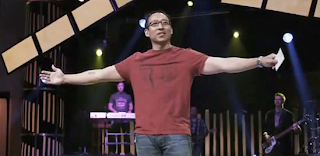 graphic T's), so he kinda has to dress nicely. I can just see my mother's or grandmother's face (and hear my grandfather's remarks) if they ever saw me at church in jeans.
I don't have a problem with people in general dressing down for church. I emphatically believe that the church should welcome people as they are. I just went clothes shopping; I know how much it costs to maintain a "nice" wardrobe, and I know that in many churches I've attended, plenty of people can't afford that. And I know the dangers of dress code expectations--I've been in
 churches that felt like highfalutin social clubs, and I spent a lot of time in high school worrying that my Sunday clothes weren't stylish enough compared to the girls in my youth group.
But my dad told me something about a community in Bayonnais, Haiti, that struck me. Haiti is the poorest country in the Americas, according to the Human Development Index. Bayonnais is the poorest part of Haiti. But at the church to which my dad's church is connected through missions and outreach, all the men come to worship in suits. My dad, who had prepared for the heat of early summer on a visit last year, felt under-dressed in his shirt and tie. There was nothing self-important about these people's church attire; they dressed this way because church was important to them, and they wanted to offer their best to God.
I still dress up for church partly because I am often in leadership positions (and will be more regularly as time goes on), partly because that's how I was raised, and partly because there's something in me, old-fashioned though it may be, that wants to show a modicum of respect and attention to the church and to God. Maybe the people in Bayonnais would be better off buying food than buying a suit; but maybe they are like the widow with two coins:
As he looked up, Jesus saw the rich putting their gifts into the temple treasury. He also saw a poor widow put in two very small copper coins. "I tell you the truth," he said, "this poor widow has put in more than all the others. All these people gave their gifts out of their wealth; but she out of her poverty put in all she had to live on." -- Luke 21:1-4
I don't have to make decisions like the people of Bayonnais. Anything I give, I give out of my wealth. It's easy for me to decide what part of me to give to God and what part to keep for myself. I don't want to romanticize poverty (see this post), and I'm not one to impose a dress code on others (though I will dress my boyfriend, and if your teenager is wearing something inappropriate--to church or anywhere, really--I might say something).
I guess I'm wondering what other people think. Does anyone really think about what they wear to church anymore? If we do, what are our considerations--respect, comfort, stylishness, attractiveness, or something else?
Friday, September 24, 2010
From Remant to Superpower
So I was pleasantly surprised to find a fascinating snippet in my reading for the class this week. Our primary textbook for the class is the Fortress Introduction to the History of Christianity in the United States by Nancy Koester. In chapter one, I came across a paragraph that tied Puritanism's view of themselves as God's chosen people (an Old Testament concept originally applied to Israel) to the essence of Americanism even today. The Israelites' story of a promised land and a divine mission resonated with the Puritans, and many would argue that the basic idea lives on in modern foreign policy.
Here's the most interesting part: "The remnant in the wilderness has become a superpower, and the old Puritan sense of accountability to divine judgment has all but vanished. Yet the chosen nation idea lives on."
With divine blessing comes divine accountability. The Puritans knew this. Are Americans today as aware of what Luke 12:48 says--"From everyone to whom much has been given, much will be required"? It can be hard to keep in tension the call of 1 Peter 2:9:
"But you are a chosen race, a royal priesthood, a holy nation, God’s own people,* in order that you may proclaim the mighty acts of him who called you out of darkness into his marvellous light."
Let's not chip off or skim over the phrase "in order that." Let's not forget the darkness from which we were brought out by a power not our own.
Tuesday, August 24, 2010
The Need for Nuance
What annoyed me about that interaction is part of what troubles me about the state of opinion and politics in this country today: an utter lack of nuance. We want the answer to every question to be simple, direct and efficacious, which is a misguided expectation that alienates us from the reality that the world is complicated. We not only lack the ability to see in shades of grey, we don't even really think it matters to be able to do that. The thing is, being a Christian absolutely depends on paradox and nuance. I'll get to that point in a minute.
The result is that we as a people are quick to jump to conclusions, to extrapolate from delicate situations and statements, and to take things to extremes in discourse. In doing so, both sides lose sight of any common ground they might once have shared. Opponents' languages become completely estranged--once each side holes up in their extreme position, the original issue has been distorted and each side is talking about something totally different. No wonder we don't understand each other.
It's not our fault. I read somewhere that America as a nation has suffered something similar to post-traumatic stress disorder in the world after 9/11. This past March, my dad wrote an article for The Charlotte Observer entitled, "Has rancor become unbeatable foe?" In it, he noted this very phenomenon:
"After we endured the numbing body blow of 9-11, we then suffered the horrifying implosion of the economy: everybody's a little bit crazy. Everybody's scared. Nobody really knows which way to turn; we lunge, we shout, we grab onto the last vestige of what we used to cling to - so naturally we're difficult to be with, and so is the other guy."
We're all a little crazy, a little scared and a lot defensive. Most recently, I've been saddened by the "conversations" surrounding the proposed Islamic community center to be built
First, I'm troubled by the inability of many Americans to differentiate between the majority of the Muslim world and al-Qaeda. Part of the problem here is that there is a wealth of ignorance about the religion of Islam. Ron Ramsey likened it to a "cult," which is ridiculous seeing that 23% of the global population identifies as Muslim. Also, the Dove World Outreach Center's sponsorship of "International Burn a Koran Day" shows an appalling obliviousness to the contents of the Quran; I've commented that there are enough parallel passages between the Bible and the Quran to equate burning a Quran with burning parts of the Bible.
The fact that almost one in five Americans believe that President Obama is Muslim is also troubling, not only because it's wrong and implies racism but also because I'm sure that to those people, being Muslim is a bad thing. Obama is not Muslim, but so what if he were? Again, it's
 this inability (or unwillingness?) to distinguish between mainstream Islam and al-Qaeda. Just today, a black man in a skull cap (with, might I add, an easily visible Under Armor logo on the front) was accosted by protesters at Ground Zero, who assumed he was Muslim. See this video of the confrontation.
I'm also bothered by controversy that's been stirred up over the imam of the proposed mosque, Feisal Abdul Rauf. I heard a clip on NPR recently that related an outcry over comments he made shortly after 9/11. Rauf
 said, "I wouldn't say that the United States deserved what happened, but the United States policies were an accessory to the crime that happened." People are outraged at the implication that the blood of the 9/11 victims is not only on the hands of the terrorists but also to some extent on the hands of U.S. policy makers. Of course, the way people frame it is by saying that the imam believes we deserved the 9/11 attacks.
But I'm with Rauf on this one. Concerning opposition to U.S. policy in the Muslim world, Rauf said, "It is a reaction against the policies of the US government, politically, where we espouse principles of democracy and human rights and where we ally ourselves with oppressive regimes in many of these countries." We do that. Some of the decisions we make in international relations are wrong. Some of our foreign policy lacks necessary nuance, like our unquestioning support of Israel. Why are we so surprised when people hate us?
I hate the fact that songs like "America the Beautiful" are in the United Methodist Hymnal. (That's another discussion.) But there's a verse of that song that doesn't get sung--or listened to even if it is sung--often:
America! America!
God mend thine ev'ry flaw,
Confirm thy soul in self-control,
Thy liberty in law.
Why is it so impossible to think that we might be wrong? Why can't we look at the tragedy of 9/11 and say that although we didn't deserve it--no country or people deserves something like that--we have made decisions that contributed to the terrorists' motives? Why are we constantly running around trying to fix everyone else's problems but are unable or unwilling to admit to our own?
Let me pull this back around full circle. (Warning: my brain synthesizes information like crazy, so I may have connected some dots that don't align in everyone's mind, at least not right away. Bear with me.) We need to be able to understand and utilize nuance. We need to be able to acknowledge prophetic speech about shortcomings without perceiving it as an attack. We need to be willing to learn and to listen, not to lump people into a group because of their faith or race or country of origin. We need to be able to hold ideas in tension and not succumb to the temptation to cast everything in stark terms.
If we explore the Christian faith thoughtfully, we find that all of these things are demanded of us by the Bible and by church tradition. The prophets, God's messengers, rarely had complimentary things to say. Jesus is fully God and fully man. We must be in the world but not of the world. To believe and live out such things, we must be humble and discerning. We need to let go of our pride. We need to live in the unresolved tensions. We need nuance.
Sunday, July 25, 2010
Beauty, Good and Evil
Before the service started, I decided to Google quotes about beauty. I was expecting fluffy sentimentalism about the clouds and sunsets, and there was plenty of that, but I also found a few warnings. The one that stuck out to me came from St. Augustine:
"Beauty is indeed a good gift of God; but that the good may not think it a great good, God dispenses it even to the wicked."
You know what this made me think of? Vampires.
OK, pop culture seems obsessed with vampires right now. Let me just set the record straight: I loathe Twilight. Loathe. I'll spare you my rant.
But I recently started watching the TV series Buffy: The Vampire Slayer. (Sidebar: Joss Whedon is brilliant.) My boyfriend (who is responsible for getting me into Buffy) was telling me the other day that one thing he likes about that series is how they represent vampires.
 Most depictions of vampires go to one extreme or another. On one end, you have creatures that are clearly monsters (see 30 Days of Night). Pointy teeth, black eyes, definitely not human. Excuse me, I think you have a little blood on your chin. I'm going to go run and hide now. Call me back when the sun comes out. In a month.
On the opposite end, you have
I said I wasn't going to rant.
Anyway, what my boyfriend said he appreciates about the vampires in Buffy is that a lot of the time they look like regular people--and not just regular people, but dark, mysterious, sexy people (oh, David Boreanaz...be still, my beating heart).
However, when they reveal their true selves, HOLY CRAP.
 *whimper*
Temptation wouldn't be tempting if it didn't look good. If evil always showed its true face, we wouldn't have this whole sin problem.
Here's another quote I found and liked:
"That which is striking and beautiful is not always good, but that which is good is always beautiful."
That's from somebody named Ninon de L'Enclos. So if something's beautiful, we know it's either good or bad, but if it's not beautiful, it's bad.
Of course, that just begs the question of our standards of beauty...but the fact remains that although we should always honor beauty in the natural world, in people, in worship, in the arts, etc., we should also be cautious of its seductive power and be able to distinguish true beauty from false beauty.
When you figure out how to do that, give me a call.
Tuesday, June 29, 2010
Thank You, GBOD
"Always remember that the Scriptures for the day should set the theme for worship, and special commemorations should happen within and related to the context of the overarching biblical and Christian seasonal themes. God's word and our common baptism tell us who we are in Christ and so establish the underlying norms for our worship, not our national, ethnic, or familial ties or current station in life."
What a great way of putting it. I know some people (myself included) get worried when they have to preach on a day like Independence Day--I was dreading the possibility of singing "America the Beautiful" in worship. It's a delicate balance that I think we mess up quite frequently--many of us want to offer a counter-narrative to patriotism that sometimes can blot out our unity in Christ, but there is nothing wrong with praying for the troops or honoring veterans. The GBOD website is trying to encourage worship planners to put our identity in Christ first, but that where recognition of human achievements and national holidays are appropriate to the Christian season, they can be included in the appropriate time and space. I'd just as soon ignore the 4th of July holiday and take up the issue of war another time, but I know the parishioners are probably going to go straight from church to a cookout and to watch fireworks. There has to be some sort of continuity and point of contact between what happens in Sunday morning worship and what's going on in the rest of the lives of the congregants. That doesn't mean unilaterally supporting cultural phenomena--the Gospel should be subversive of anything that detracts from its singular position in our lives--but it does mean finding the connections and making space for transformation. Anyway, I'm sort of thinking out loud, but those are just some of my musings on the subject, which I'll be refining in my own head over the course of this week.
Back to the lectionary. I'm thinking 2 Kings. I really like the Naaman story.
Thursday, February 19, 2009
Should We Save Money?
As a disclaimer, I struggle with my relationship with money. Although people I love and respect have argued convincingly that wealth and sin are not necessarily correlated, I still have a really hard time even just being around people who have extreme wealth. I even feel guilty about the kind of car I drive, even if I only own it because of bizarre circumstances involving a car wreck (heh). Anyway, I just wanted to say upfront that I come down hard on the side of money being bad, and that obviously colors this discussion for me.
Over winter break, I went on a mission trip with my campus ministry group from Duke University. We worked for several days on hurricane relief in Galveston, then returned to Houston for a few days to celebrate the new year and to visit Casa Juan Diego. CJD is a Catholic Worker House that publishes the Houston Catholic Worker and provides housing to hundreds of illegal (yes, only illegal) immigrants and their families.
There are hundreds of reasons I'm basically in love with this place, but for now let's focus on their treatment of money. They provide food, housing, medical care, clothing, and countless other services to hundreds and hundreds of people every day. That costs money. When I asked the founders, Mark and Louise Zwick, how they raise funds, they simply responded, "We pray a lot." They get donations, mostly from individuals, and God provides. Their entire operation is based on enormous trust in God's ability to move in the hearts (and wallets) of other people.
The more interesting aspect of CJD's treatment of money as it pertains to this particular discussion is how they use funds once they receive them. CJD does not save money. Not a cent. When they get a donation, they immediately assess how it can best be used, and they use it. Nothing gets holed away for later; it is used to meet needs as they come and as funds are available. Mark and Louise don't have a retirement plan. They don't even necessarily know if they'll have money to run CJD each new day.
I personally operate a bit like this in the sense that I generally use whatever money I earn as it comes, but that's probably more out of my own inability to budget or even think about numbers than a desire to use my resources in a manner that mirror's CJD's approach. But the question of saving for retirement or what have you still remains. Kelley argues that even though he does believe Jesus is coming back and could do so even today, it's simply not good stewardship not to plan ahead. And of course, it's all well and good for me not to give a lick about how much money I'll have next month after I pay my rent now that I'm a single 20-something looking at a few more years of school (which will be paid for, by the way), but when I get married and have kids, how "responsible" do I need to become in setting aside money for my family? My parents have a retirement plan and fantastic life insurance (no, I'm not planning to murder my dad). How will I approach that as a "real" adult? I don't pretend to know. I love the idea of existing from day to day, trusting God will provide and not feeling like I can't do something or help someone because I need to save that money for when I'm 65. But I hear having kids changes everything. I guess we'll see.
That post was way less articulate and intellectual than I had hoped, but oh well.
Saturday, February 9, 2008
Choose This Day Whom You Will Serve
The observation doesn't bother me in the image itself, because it's a powerful one tinged with truth and beauty. What bothers me about it is that it is always such a surprise for middle-class, white Americans to find that poor people are often happier than they are.
It seems to me that we shouldn't be surprised that the hymns sung in Cameroon sound more genuine than those lifted in some American churches. I'm definitely not going to try and romanticize poverty, but it seems to have escaped our attention that we live in a society that is often toxic. We live in a culture driven by fear, in an economy built on perceived lack, in a country where happiness often requires drugs—and I'm not even talking about the illegal kind.
I am frequently troubled by the prevalence of eating disorders, depression and other forms of mental illness in those around me. I am bothered not only because the darkness in people's lives is often so complete I don't know how to penetrate it, but also because I believe that those kinds of things are encouraged by our culture. In the face of world poverty, anorexia and bulimia disturb me; a starving girl in Tanzania can't worry about her body image because she doesn't even have a choice as to whether or not she'll eat today, while an economically comfortable, intelligent Duke undergraduate has the luxury of choosing to starve themselves. Antidepressants are not for people living in war-torn regions where death and illness and trauma and hunger are plainly recognizable in the face of daily life; Zoloft is for those with the leisure time to realize how empty their lives have become.
I'm not trying to downplay the seriousness of illnesses like anorexia, depression, ADD and so on—I've seen these things take hold of the lives of those very close to me; I know their power. Nor am I trying to suggest that someone should feel guilty for dieting when there are people literally dying for the food that others can choose to consume or to throw out. The guilty party is not any individual, but a consumer culture that dictates a gospel of success, inane happiness and hedonism, which should be completely foreign to the Gospel of Christ—but which, unfortunately, is not always read as such.
The thing is, I'm not in the least bit surprised that the Christians in Cameroon seem more joyful in God than the Christians in America. We are tempted daily to put our trust in wealth, good looks, success and human approval; none of these temptations are held before those who live in mud shacks. Without the distractions of an idolatrous culture, West Africans have no trouble discerning to whom they should turn in times of trouble and in times of rejoicing: it's always God. The challenges of their lives seem obvious to those of us who never want for food or shelter, but the struggles in our lives are subtle and insidious, products of a culture that tells us we can't be happy unless we have an iPhone, that we won't be able to meet people unless we drink Budweiser, that our lives are not meaningful without a Lexus to match that executive position. We need to learn to recognize cultural icons as potential idols, as alternative gods, and "choose this day whom you will serve" (Joshua 24:15).
Tuesday, January 22, 2008
Politics in the Pulpit
An issue that seems to me to go along with this question is that of having an American flag on display in the sanctuary. This could probably take up a whole post on its own, but I am in the camp that just doesn't want stars and bars as a backdrop when I'm in worship. The rationale behind that conviction is lengthier than this, but one of the major things is that the church, the body of Christ, is so much bigger than anything the American flag represents. I love the song "King and a Kingdom" by Derek Webb. Here's part of the chorus: "My first allegiance is not to a flag, a country or a man; / ... / It's to a King and a Kingdom." The truth that lies in those words is that the Christian church is intensely political, but that our first allegiance is not to Old Glory but to the cross.
The second verse of that Derek Webb song goes like this: "There are two great lies that I've heard: / The day you eat of the fruit of that tree, you will not surely die / and that Jesus Christ was a white, middle-class Republican / and if you wanna be saved you have to learn to be like Him." These lines may evince a certain political bent, but the point is much broader than that: Jesus was not a Democrat or a Republican. He wasn't even American. Sometimes I feel like we domesticate Jesus so much that we forget that basic fact. Jesus was particular in that he was an individual Israelite, but he was and is universal in that he died for the sins of all. That alone should strike Christians as a command to recognize a power beyond temporal authority, a power that should shape the way in which we conceive of that authority, a power that in a perfect world would be mirrored, though dimly, in human leaders.
The politics of Christ are not about political parties or individual presidential candidates. This does not mean that Christians should not talk about whether they are registered Republicans or Democrats, or whom they favor in the primaries. Too often the American vote is jealously guarded as a personal decision when really there are endless issues surrounding elections that should be talked about in communities whose concern is not for the supposed sanctity or autonomy of each individual's vote but for the greater good. These days it has become very difficult to talk politics with people whose views differ from your own. However, the church should be a place not of fear or dissent but of honesty, respect and love. We are challenged by our communal life in Christ to live out our faith in front of one another, willing to change and improve our understanding and actions if necessary. Perhaps it is inappropriate to endorse a candidate from the pulpit, but that does not mean that all talk of politics should be left at the door when going to church. The moment the church becomes a place where politics are taboo, we forget where we came from and where we are going—we forget Christ.
Monday, October 25, 2010
Freedom and Responsibility
With freedom comes responsibility. With the freedom of speech comes the responsibility to listen. Are we willing to listen, or do we just want to hear ourselves talk?
Wednesday, October 13, 2010
Why I Still Dress Up for Church
As a child, I had Sunday clothes. The distinction was massive in my elementary school years, when I was a tomboy who kept her hair as short as her parents would allow and who hated wearing dresses. So putting on a dress to go to church was a big deal. The difference was less dramatic once I grew my hair back out and started wearing something besides sweatpants and t-shirts. But I still dressed up.
I remember the first time I wore jeans to church. It was mildly traumatic. I can count on one hand the number of times I've worn jeans to church. I'm sure a lot of my aversion to doing so comes from my family's deep Southern and Christian roots--my grandparents are always dressed to the T, my mother has indefatigable fashion sense, and my dad's a pastor (and not the kind that wears jeans and graphic T's), so he kinda has to dress nicely. I can just see my mother's or grandmother's face (and hear my grandfather's remarks) if they ever saw me at church in jeans.
I don't have a problem with people in general dressing down for church. I emphatically believe that the church should welcome people as they are. I just went clothes shopping; I know how much it costs to maintain a "nice" wardrobe, and I know that in many churches I've attended, plenty of people can't afford that. And I know the dangers of dress code expectations--I've been in churches that felt like highfalutin social clubs, and I spent a lot of time in high school worrying that my Sunday clothes weren't stylish enough compared to the girls in my youth group.
But my dad told me something about a community in Bayonnais, Haiti, that struck me. Haiti is the poorest country in the Americas, according to the Human Development Index. Bayonnais is the poorest part of Haiti. But at the church to which my dad's church is connected through missions and outreach, all the men come to worship in suits. My dad, who had prepared for the heat of early summer on a visit last year, felt under-dressed in his shirt and tie. There was nothing self-important about these people's church attire; they dressed this way because church was important to them, and they wanted to offer their best to God.
I still dress up for church partly because I am often in leadership positions (and will be more regularly as time goes on), partly because that's how I was raised, and partly because there's something in me, old-fashioned though it may be, that wants to show a modicum of respect and attention to the church and to God. Maybe the people in Bayonnais would be better off buying food than buying a suit; but maybe they are like the widow with two coins:
As he looked up, Jesus saw the rich putting their gifts into the temple treasury. He also saw a poor widow put in two very small copper coins. "I tell you the truth," he said, "this poor widow has put in more than all the others. All these people gave their gifts out of their wealth; but she out of her poverty put in all she had to live on." -- Luke 21:1-4
I don't have to make decisions like the people of Bayonnais. Anything I give, I give out of my wealth. It's easy for me to decide what part of me to give to God and what part to keep for myself. I don't want to romanticize poverty (see this post), and I'm not one to impose a dress code on others (though I will dress my boyfriend, and if your teenager is wearing something inappropriate--to church or anywhere, really--I might say something).
I guess I'm wondering what other people think. Does anyone really think about what they wear to church anymore? If we do, what are our considerations--respect, comfort, stylishness, attractiveness, or something else?
Friday, September 24, 2010
From Remant to Superpower
I'm just gonna say it. American Christianity bores me to tears. It's not the professor's fault. I'm just utterly disinterested in American history. I don't know why. I love European history, and just about anything that happened before 1600 fascinates me. But American history? Call me back when the World Wars start.
So I was pleasantly surprised to find a fascinating snippet in my reading for the class this week. Our primary textbook for the class is the Fortress Introduction to the History of Christianity in the United States by Nancy Koester. In chapter one, I came across a paragraph that tied Puritanism's view of themselves as God's chosen people (an Old Testament concept originally applied to Israel) to the essence of Americanism even today. The Israelites' story of a promised land and a divine mission resonated with the Puritans, and many would argue that the basic idea lives on in modern foreign policy.
Here's the most interesting part: "The remnant in the wilderness has become a superpower, and the old Puritan sense of accountability to divine judgment has all but vanished. Yet the chosen nation idea lives on."
With divine blessing comes divine accountability. The Puritans knew this. Are Americans today as aware of what Luke 12:48 says--"From everyone to whom much has been given, much will be required"? It can be hard to keep in tension the call of 1 Peter 2:9:
"But you are a chosen race, a royal priesthood, a holy nation, God’s own people,* in order that you may proclaim the mighty acts of him who called you out of darkness into his marvellous light."
Let's not chip off or skim over the phrase "in order that." Let's not forget the darkness from which we were brought out by a power not our own.
Tuesday, August 24, 2010
The Need for Nuance
Last fall semester, I had an irritating experience in a class discussion. Our preceptor had asked us a question pertaining to the day's readings, and she wanted a "yes" or a "no." As it turned out, the answer (per my view, confirmed by my dad and other smarter people) was "yes, but." I tried to argue my point against my preceptor's response of "no," but she wouldn't budge.
What annoyed me about that interaction is part of what troubles me about the state of opinion and politics in this country today: an utter lack of nuance. We want the answer to every question to be simple, direct and efficacious, which is a misguided expectation that alienates us from the reality that the world is complicated. We not only lack the ability to see in shades of grey, we don't even really think it matters to be able to do that. The thing is, being a Christian absolutely depends on paradox and nuance. I'll get to that point in a minute.
The result is that we as a people are quick to jump to conclusions, to extrapolate from delicate situations and statements, and to take things to extremes in discourse. In doing so, both sides lose sight of any common ground they might once have shared. Opponents' languages become completely estranged--once each side holes up in their extreme position, the original issue has been distorted and each side is talking about something totally different. No wonder we don't understand each other.
It's not our fault. I read somewhere that America as a nation has suffered something similar to post-traumatic stress disorder in the world after 9/11. This past March, my dad wrote an article for The Charlotte Observer entitled, "Has rancor become unbeatable foe?" In it, he noted this very phenomenon:
"After we endured the numbing body blow of 9-11, we then suffered the horrifying implosion of the economy: everybody's a little bit crazy. Everybody's scared. Nobody really knows which way to turn; we lunge, we shout, we grab onto the last vestige of what we used to cling to - so naturally we're difficult to be with, and so is the other guy."
We're all a little crazy, a little scared and a lot defensive. Most recently, I've been saddened by the "conversations" surrounding the proposed Islamic community center to be built right at two blocks from Ground Zero. I already posted a blog about this controversy, but there are two aspects of the issue that I think have to do with this need for nuance.
First, I'm troubled by the inability of many Americans to differentiate between the majority of the Muslim world and al-Qaeda. Part of the problem here is that there is a wealth of ignorance about the religion of Islam. Ron Ramsey likened it to a "cult," which is ridiculous seeing that 23% of the global population identifies as Muslim. Also, the Dove World Outreach Center's sponsorship of "International Burn a Koran Day" shows an appalling obliviousness to the contents of the Quran; I've commented that there are enough parallel passages between the Bible and the Quran to equate burning a Quran with burning parts of the Bible.
The fact that almost one in five Americans believe that President Obama is Muslim is also troubling, not only because it's wrong and implies racism but also because I'm sure that to those people, being Muslim is a bad thing. Obama is not Muslim, but so what if he were? Again, it's this inability (or unwillingness?) to distinguish between mainstream Islam and al-Qaeda. Just today, a black man in a skull cap (with, might I add, an easily visible Under Armor logo on the front) was accosted by protesters at Ground Zero, who assumed he was Muslim. See this video of the confrontation.
I'm also bothered by controversy that's been stirred up over the imam of the proposed mosque, Feisal Abdul Rauf. I heard a clip on NPR recently that related an outcry over comments he made shortly after 9/11. Rauf said, "I wouldn't say that the United States deserved what happened, but the United States policies were an accessory to the crime that happened." People are outraged at the implication that the blood of the 9/11 victims is not only on the hands of the terrorists but also to some extent on the hands of U.S. policy makers. Of course, the way people frame it is by saying that the imam believes we deserved the 9/11 attacks.
But I'm with Rauf on this one. Concerning opposition to U.S. policy in the Muslim world, Rauf said, "It is a reaction against the policies of the US government, politically, where we espouse principles of democracy and human rights and where we ally ourselves with oppressive regimes in many of these countries." We do that. Some of the decisions we make in international relations are wrong. Some of our foreign policy lacks necessary nuance, like our unquestioning support of Israel. Why are we so surprised when people hate us?
I hate the fact that songs like "America the Beautiful" are in the United Methodist Hymnal. (That's another discussion.) But there's a verse of that song that doesn't get sung--or listened to even if it is sung--often:
America! America!
God mend thine ev'ry flaw,
Confirm thy soul in self-control,
Thy liberty in law.
Why is it so impossible to think that we might be wrong? Why can't we look at the tragedy of 9/11 and say that although we didn't deserve it--no country or people deserves something like that--we have made decisions that contributed to the terrorists' motives? Why are we constantly running around trying to fix everyone else's problems but are unable or unwilling to admit to our own?
Let me pull this back around full circle. (Warning: my brain synthesizes information like crazy, so I may have connected some dots that don't align in everyone's mind, at least not right away. Bear with me.) We need to be able to understand and utilize nuance. We need to be able to acknowledge prophetic speech about shortcomings without perceiving it as an attack. We need to be willing to learn and to listen, not to lump people into a group because of their faith or race or country of origin. We need to be able to hold ideas in tension and not succumb to the temptation to cast everything in stark terms.
If we explore the Christian faith thoughtfully, we find that all of these things are demanded of us by the Bible and by church tradition. The prophets, God's messengers, rarely had complimentary things to say. Jesus is fully God and fully man. We must be in the world but not of the world. To believe and live out such things, we must be humble and discerning. We need to let go of our pride. We need to live in the unresolved tensions. We need nuance.
Sunday, July 25, 2010
Beauty, Good and Evil
Tonight, I led a Sunday evening worship service where the theme was "Beauty." I had one attendee, and per Matthew 18:20, that was just fine with me.
Before the service started, I decided to Google quotes about beauty. I was expecting fluffy sentimentalism about the clouds and sunsets, and there was plenty of that, but I also found a few warnings. The one that stuck out to me came from St. Augustine:
"Beauty is indeed a good gift of God; but that the good may not think it a great good, God dispenses it even to the wicked."
You know what this made me think of? Vampires.
OK, pop culture seems obsessed with vampires right now. Let me just set the record straight: I loathe Twilight. Loathe. I'll spare you my rant.
But I recently started watching the TV series Buffy: The Vampire Slayer. (Sidebar: Joss Whedon is brilliant.) My boyfriend (who is responsible for getting me into Buffy) was telling me the other day that one thing he likes about that series is how they represent vampires.Most depictions of vampires go to one extreme or another. On one end, you have creatures that are clearly monsters (see 30 Days of Night). Pointy teeth, black eyes, definitely not human. Excuse me, I think you have a little blood on your chin. I'm going to go run and hide now. Call me back when the sun comes out. In a month.
On the opposite end, you have sexy pasty, dreamy creepy immortals who go to high school over and over again (WHY???), stalk teenage girls...and sparkle.
I said I wasn't going to rant.
Anyway, what my boyfriend said he appreciates about the vampires in Buffy is that a lot of the time they look like regular people--and not just regular people, but dark, mysterious, sexy people (oh, David Boreanaz...be still, my beating heart).
However, when they reveal their true selves, HOLY CRAP.
*whimper*Temptation wouldn't be tempting if it didn't look good. If evil always showed its true face, we wouldn't have this whole sin problem.
Here's another quote I found and liked:
"That which is striking and beautiful is not always good, but that which is good is always beautiful."
That's from somebody named Ninon de L'Enclos. So if something's beautiful, we know it's either good or bad, but if it's not beautiful, it's bad.
Of course, that just begs the question of our standards of beauty...but the fact remains that although we should always honor beauty in the natural world, in people, in worship, in the arts, etc., we should also be cautious of its seductive power and be able to distinguish true beauty from false beauty.
When you figure out how to do that, give me a call.
Tuesday, June 29, 2010
Thank You, GBOD
The United Methodist Church's General Board of Discipleship (GBOD) makes worship and teaching resources available through their website (which, by the way, is confusing since they changed the design/layout). Their lectionary resources for this coming Sunday (July 4) point preachers to blessings and prayers for the military and veterans, but they also include this paragraph:
"Always remember that the Scriptures for the day should set the theme for worship, and special commemorations should happen within and related to the context of the overarching biblical and Christian seasonal themes. God's word and our common baptism tell us who we are in Christ and so establish the underlying norms for our worship, not our national, ethnic, or familial ties or current station in life."
What a great way of putting it. I know some people (myself included) get worried when they have to preach on a day like Independence Day--I was dreading the possibility of singing "America the Beautiful" in worship. It's a delicate balance that I think we mess up quite frequently--many of us want to offer a counter-narrative to patriotism that sometimes can blot out our unity in Christ, but there is nothing wrong with praying for the troops or honoring veterans. The GBOD website is trying to encourage worship planners to put our identity in Christ first, but that where recognition of human achievements and national holidays are appropriate to the Christian season, they can be included in the appropriate time and space. I'd just as soon ignore the 4th of July holiday and take up the issue of war another time, but I know the parishioners are probably going to go straight from church to a cookout and to watch fireworks. There has to be some sort of continuity and point of contact between what happens in Sunday morning worship and what's going on in the rest of the lives of the congregants. That doesn't mean unilaterally supporting cultural phenomena--the Gospel should be subversive of anything that detracts from its singular position in our lives--but it does mean finding the connections and making space for transformation. Anyway, I'm sort of thinking out loud, but those are just some of my musings on the subject, which I'll be refining in my own head over the course of this week.
Back to the lectionary. I'm thinking 2 Kings. I really like the Naaman story.
Thursday, February 19, 2009
Should We Save Money?
It seems to be a day of reflection, which is good, because I'm struggling with my job right now (more on that later, most likely). I'm listening to a sermon by Dr. Benji Kelley, pastor of New Hope Church in Durham, NC. In discussing money, he advocates a "10-10-80 Plan": give 10% of your income to the church as a tithe, save 10% for yourself for the future, and use 80% to live on now. There's nothing inherently wrong with this formula, and his main point, of course, is that you should tithe in response to Biblical command, but I want to needle at this a bit anyway.
As a disclaimer, I struggle with my relationship with money. Although people I love and respect have argued convincingly that wealth and sin are not necessarily correlated, I still have a really hard time even just being around people who have extreme wealth. I even feel guilty about the kind of car I drive, even if I only own it because of bizarre circumstances involving a car wreck (heh). Anyway, I just wanted to say upfront that I come down hard on the side of money being bad, and that obviously colors this discussion for me.
Over winter break, I went on a mission trip with my campus ministry group from Duke University. We worked for several days on hurricane relief in Galveston, then returned to Houston for a few days to celebrate the new year and to visit Casa Juan Diego. CJD is a Catholic Worker House that publishes the Houston Catholic Worker and provides housing to hundreds of illegal (yes, only illegal) immigrants and their families.
There are hundreds of reasons I'm basically in love with this place, but for now let's focus on their treatment of money. They provide food, housing, medical care, clothing, and countless other services to hundreds and hundreds of people every day. That costs money. When I asked the founders, Mark and Louise Zwick, how they raise funds, they simply responded, "We pray a lot." They get donations, mostly from individuals, and God provides. Their entire operation is based on enormous trust in God's ability to move in the hearts (and wallets) of other people.
The more interesting aspect of CJD's treatment of money as it pertains to this particular discussion is how they use funds once they receive them. CJD does not save money. Not a cent. When they get a donation, they immediately assess how it can best be used, and they use it. Nothing gets holed away for later; it is used to meet needs as they come and as funds are available. Mark and Louise don't have a retirement plan. They don't even necessarily know if they'll have money to run CJD each new day.
I personally operate a bit like this in the sense that I generally use whatever money I earn as it comes, but that's probably more out of my own inability to budget or even think about numbers than a desire to use my resources in a manner that mirror's CJD's approach. But the question of saving for retirement or what have you still remains. Kelley argues that even though he does believe Jesus is coming back and could do so even today, it's simply not good stewardship not to plan ahead. And of course, it's all well and good for me not to give a lick about how much money I'll have next month after I pay my rent now that I'm a single 20-something looking at a few more years of school (which will be paid for, by the way), but when I get married and have kids, how "responsible" do I need to become in setting aside money for my family? My parents have a retirement plan and fantastic life insurance (no, I'm not planning to murder my dad). How will I approach that as a "real" adult? I don't pretend to know. I love the idea of existing from day to day, trusting God will provide and not feeling like I can't do something or help someone because I need to save that money for when I'm 65. But I hear having kids changes everything. I guess we'll see.
That post was way less articulate and intellectual than I had hoped, but oh well.
Saturday, February 9, 2008
Choose This Day Whom You Will Serve
This morning I heard a friend of mine talk about a recent mission trip he took to West Africa. He had had a great experience, and I'm thrilled for that, but there was something he said that I hear over and over that just irritates me. He talked about how these people live in huts made of straw and mud and sometimes cinderblocks, but despite their poverty their worship is filled with joy.
The observation doesn't bother me in the image itself, because it's a powerful one tinged with truth and beauty. What bothers me about it is that it is always such a surprise for middle-class, white Americans to find that poor people are often happier than they are.
It seems to me that we shouldn't be surprised that the hymns sung in Cameroon sound more genuine than those lifted in some American churches. I'm definitely not going to try and romanticize poverty, but it seems to have escaped our attention that we live in a society that is often toxic. We live in a culture driven by fear, in an economy built on perceived lack, in a country where happiness often requires drugs—and I'm not even talking about the illegal kind.
I am frequently troubled by the prevalence of eating disorders, depression and other forms of mental illness in those around me. I am bothered not only because the darkness in people's lives is often so complete I don't know how to penetrate it, but also because I believe that those kinds of things are encouraged by our culture. In the face of world poverty, anorexia and bulimia disturb me; a starving girl in Tanzania can't worry about her body image because she doesn't even have a choice as to whether or not she'll eat today, while an economically comfortable, intelligent Duke undergraduate has the luxury of choosing to starve themselves. Antidepressants are not for people living in war-torn regions where death and illness and trauma and hunger are plainly recognizable in the face of daily life; Zoloft is for those with the leisure time to realize how empty their lives have become.
I'm not trying to downplay the seriousness of illnesses like anorexia, depression, ADD and so on—I've seen these things take hold of the lives of those very close to me; I know their power. Nor am I trying to suggest that someone should feel guilty for dieting when there are people literally dying for the food that others can choose to consume or to throw out. The guilty party is not any individual, but a consumer culture that dictates a gospel of success, inane happiness and hedonism, which should be completely foreign to the Gospel of Christ—but which, unfortunately, is not always read as such.
The thing is, I'm not in the least bit surprised that the Christians in Cameroon seem more joyful in God than the Christians in America. We are tempted daily to put our trust in wealth, good looks, success and human approval; none of these temptations are held before those who live in mud shacks. Without the distractions of an idolatrous culture, West Africans have no trouble discerning to whom they should turn in times of trouble and in times of rejoicing: it's always God. The challenges of their lives seem obvious to those of us who never want for food or shelter, but the struggles in our lives are subtle and insidious, products of a culture that tells us we can't be happy unless we have an iPhone, that we won't be able to meet people unless we drink Budweiser, that our lives are not meaningful without a Lexus to match that executive position. We need to learn to recognize cultural icons as potential idols, as alternative gods, and "choose this day whom you will serve" (Joshua 24:15).
Tuesday, January 22, 2008
Politics in the Pulpit
Lately I've heard questions about whether a preacher should endorse a presidential candidate from the pulpit. The general consensus seems to be that this is bad taste. Some people hold this opinion because they feel that sermons shouldn't deal with politics, but I disagree—Jesus himself was a highly political figure. However, I think there is a point embedded in here about how the church should think about the upcoming election.
An issue that seems to me to go along with this question is that of having an American flag on display in the sanctuary. This could probably take up a whole post on its own, but I am in the camp that just doesn't want stars and bars as a backdrop when I'm in worship. The rationale behind that conviction is lengthier than this, but one of the major things is that the church, the body of Christ, is so much bigger than anything the American flag represents. I love the song "King and a Kingdom" by Derek Webb. Here's part of the chorus: "My first allegiance is not to a flag, a country or a man; / ... / It's to a King and a Kingdom." The truth that lies in those words is that the Christian church is intensely political, but that our first allegiance is not to Old Glory but to the cross.
The second verse of that Derek Webb song goes like this: "There are two great lies that I've heard: / The day you eat of the fruit of that tree, you will not surely die / and that Jesus Christ was a white, middle-class Republican / and if you wanna be saved you have to learn to be like Him." These lines may evince a certain political bent, but the point is much broader than that: Jesus was not a Democrat or a Republican. He wasn't even American. Sometimes I feel like we domesticate Jesus so much that we forget that basic fact. Jesus was particular in that he was an individual Israelite, but he was and is universal in that he died for the sins of all. That alone should strike Christians as a command to recognize a power beyond temporal authority, a power that should shape the way in which we conceive of that authority, a power that in a perfect world would be mirrored, though dimly, in human leaders.
The politics of Christ are not about political parties or individual presidential candidates. This does not mean that Christians should not talk about whether they are registered Republicans or Democrats, or whom they favor in the primaries. Too often the American vote is jealously guarded as a personal decision when really there are endless issues surrounding elections that should be talked about in communities whose concern is not for the supposed sanctity or autonomy of each individual's vote but for the greater good. These days it has become very difficult to talk politics with people whose views differ from your own. However, the church should be a place not of fear or dissent but of honesty, respect and love. We are challenged by our communal life in Christ to live out our faith in front of one another, willing to change and improve our understanding and actions if necessary. Perhaps it is inappropriate to endorse a candidate from the pulpit, but that does not mean that all talk of politics should be left at the door when going to church. The moment the church becomes a place where politics are taboo, we forget where we came from and where we are going—we forget Christ.
